




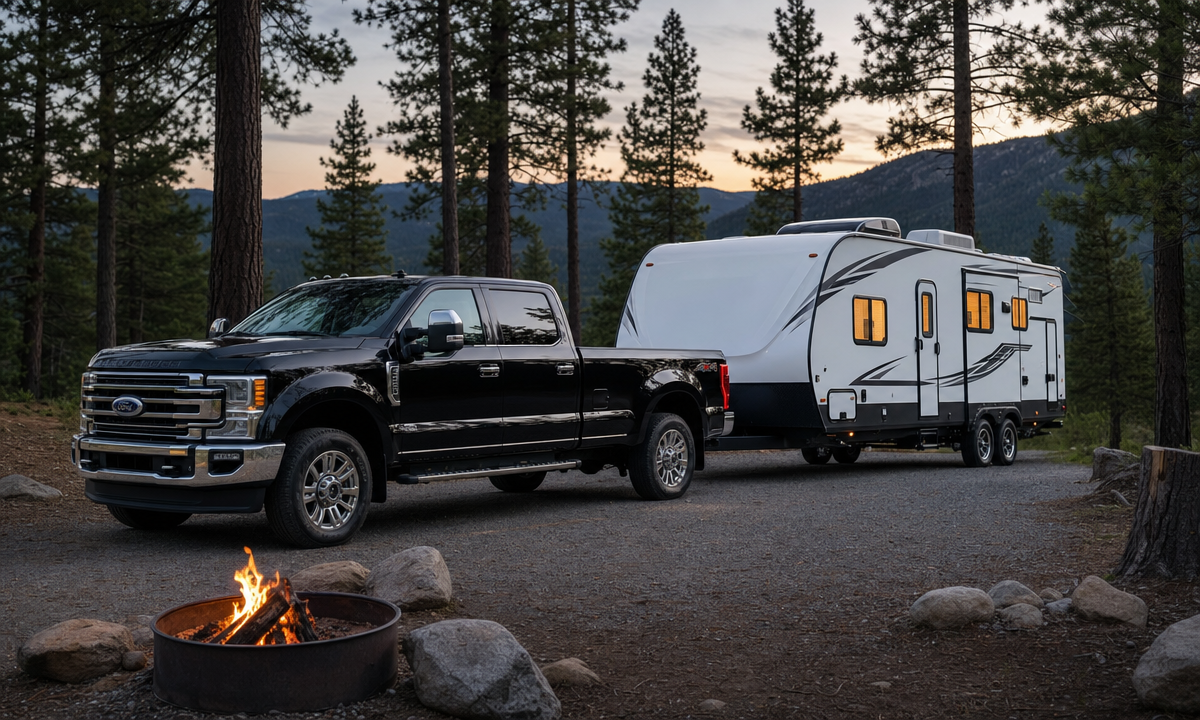
Start with the trailer as you will use it
An empty or dry trailer weight is not the same as the weight of a loaded trip. Account for the supplies and equipment that travel with it, and use reliable loaded-weight information when evaluating a tow vehicle.
The truck carries more than passengers and bags. Accessories and trailer tongue load also use available capacity. A setup can reach a payload, axle, hitch or combined-weight limit before the truck family’s advertised maximum trailer rating.
Trailer
Work from fully loaded weight, not an empty brochure figure.
Truck
Use its payload label, towing guide and component ratings.
Equipment
Match hitch, coupler, brake controller and related requirements to the manuals.
See how quickly payload gets used
Change the values below to see how people, cargo, accessories and trailer tongue load use an example payload. Start with reliable weights and your actual door label.
ILLUSTRATION ONLY · ENTER YOUR OWN VALUES
payload illustration200 lb
Illustration, not a vehicle rating or towing approval. This subtraction does not evaluate axle, hitch, trailer, combined-weight or other limits. Use reliable weights and the manufacturer’s requirements.
Compare actual vehicles against the same load
Bring your trailer information when comparing a Ford or Ram. Ask to review the candidate truck’s exact model-year guide, engine, cab, bed, axle, drivetrain and required towing equipment.
If a heavy-duty truck belongs in the discussion, consider it on its own specifications and everyday fit. Do not assume a performance or luxury trim automatically creates more available payload.
0 of 5 checked
Give the route the same attention as the campsite
Around Western North Carolina, a short distance can still include grades, curves and limited sight lines. The National Park Service also calls attention to tunnel-clearance considerations on the Blue Ridge Parkway. Plan the route for the actual height, length and handling requirements of your combination.
Check current road information before leaving, including closures and restrictions that could affect your chosen route. Static research content cannot tell you that a particular road is open today or that a specific rig will clear every obstacle.
Make departure a repeatable routine
Use the checklists and procedures provided by the vehicle, trailer and towing-equipment manufacturers. Confirm the connection, lighting, tires and any required brake equipment, and allow time to address a concern before the trip begins.
Mahon Motors can help organize the vehicle side of the comparison. Bring the details of your intended load and ask questions about a specific truck rather than selecting one from an advertised maximum alone.
Questions you may be asking
Can I choose a truck from its maximum tow rating?
Use that figure only as a starting point. The exact configuration, load and component limits determine whether a combination fits the manufacturer’s requirements.
Does this calculator approve my setup?
No. It illustrates one payload subtraction only. It does not check axle, hitch, trailer, combined-weight or other limits.
Where should I check current Parkway conditions?
Use the National Park Service road-information link and check the requirements of the entire route you intend to travel.